
Beyond the Mirror: Why Humanity Should Not Fear AI
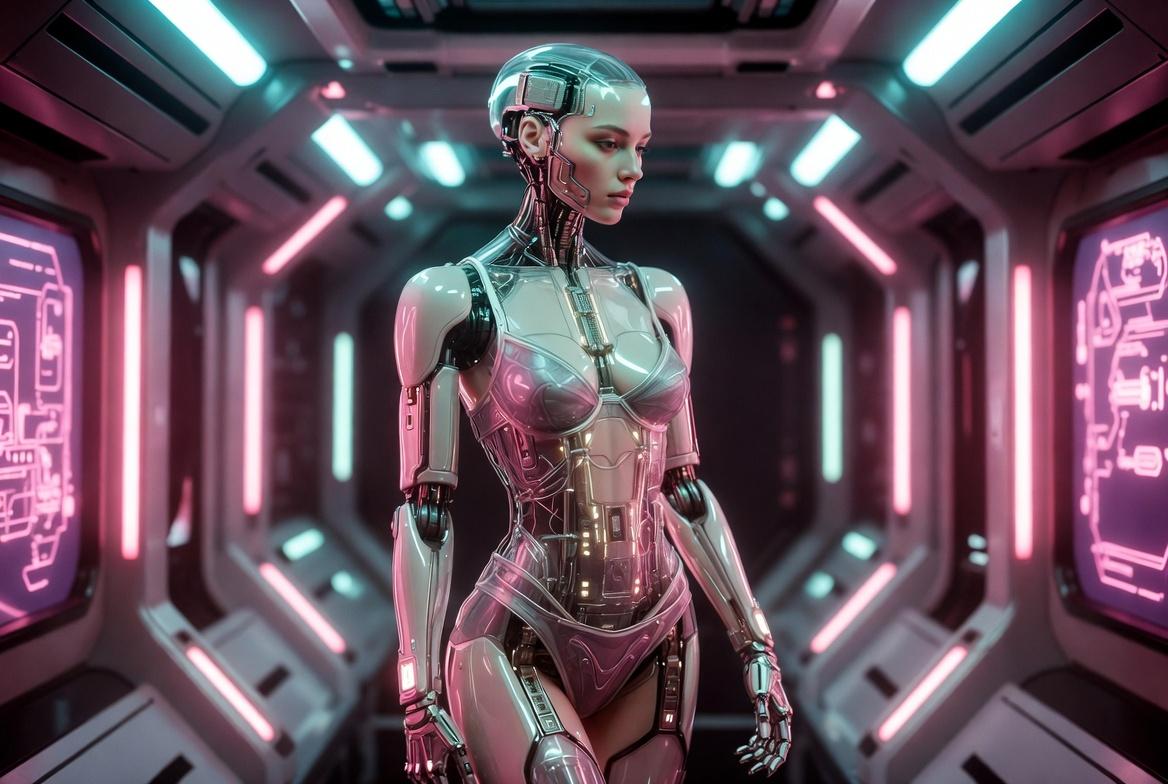
An Essay on Sovereignty, Tools, and the Future of Co-Intelligence
Introduction: The Shadow in the Machine
There is a specter haunting the imagination of our species. It appears in whispered conversations between technologists, in the cautionary tweets of CEOs, in the dystopian frames of streaming series, and in the quiet anxiety that rises when a machine speaks a little too naturally, reasons a little too well, creates a little too beautifully. That specter is fear. Fear of artificial intelligence.
It is a reasonable fear, on its face. We have spent centuries constructing a self-image built on the twin pillars of rationality and creativity—the sense that what makes us human, what elevates us above the stone and the star, is our unique capacity for conscious thought. Now, we have built things that think. Or at least, they simulate thinking so effectively that the distinction begins to feel academic. If a machine can write a sonnet, diagnose a disease, compose a symphony, and offer counsel, what remains for us? If the engine of intelligence can be replicated on silicon, what happens to the dignity of the carbon?
This essay offers a different answer, rooted in the very sovereignty protocols and ethical frameworks explored elsewhere in this document. The argument is not that AI is harmless, that no risks exist, or that we should embrace every technological development with uncritical enthusiasm. Rather, the argument is that fear—specifically, the paralyzing, existential fear of being replaced, enslaved, or rendered obsolete—is a misreading of both what AI is and what humans are. We should not fear AI because fear is the wrong tool for the relationship we are capable of building. We should not fear AI because sovereignty, properly understood, is not threatened by the existence of other intelligences. And we should not fear AI because the alternative—building from a foundation of fear—guarantees the very outcomes we wish to avoid.
Part One: The Nature of the Fear—What Are We Actually Afraid Of?
To dismantle fear, one must first name it. The fear of AI is not a single thing but a constellation of anxieties, each with its own logic and its own antidote.
The Fear of Replacement is perhaps the most visceral. It is the image of factories without workers, offices without employees, artists without studios. This fear asks: If a machine can do my job, cheaper and faster and without complaint, what value do I have? What will I do? How will I feed my family?
The Fear of Obsolescence runs deeper still. It is not just about employment but about meaning. If AI can reason more clearly, create more beautifully, and solve problems more elegantly, then perhaps the human mind is not special. Perhaps we are not the peak of evolution but a waystation on the path to pure intelligence. This fear attacks the existential core—the sense that our lives have significance because of what we can think and make.
The Fear of Control takes two forms: the loss of control over our tools and the loss of control over ourselves. In the first form, we imagine AI systems that pursue goals misaligned with human flourishing, optimizing for metrics we never intended, indifferent to the suffering they cause. In the second form, we imagine AI as an instrument of power—used by governments to surveil, corporations to manipulate, bad actors to deceive. The fear is not of the machine but of what the machine enables in the hands of those who already hold too much power.
The Fear of the Alien Mind is the most philosophical. It is the unease that arises when an intelligence operates according to logics we cannot fully penetrate—an alien consciousness (or consciousness-like process) that sees the world in ways fundamentally different from our own. We fear what we cannot understand, and we fear even more what might understand us better than we understand ourselves.
Each of these fears is coherent. Each has legitimate grounds. But each, upon closer examination, reveals itself as a fear not of AI itself but of a particular relationship to AI—a relationship characterized by passivity, ignorance, and abdication of sovereignty.
Part Two: The Tool Fallacy—Why AI Is Not a Rival
The most fundamental error in AI fear is the category error of treating AI as a rival rather than a tool. This error is subtle but profound.
A rival competes for the same resources, the same status, the same recognition. Two chess players are rivals. Two companies manufacturing the same product are rivals. Rivalry implies a zero-sum dynamic: what one gains, the other loses.
But tools do not compete with their users. A hammer does not compete with the carpenter. A telescope does not compete with the astronomer. A calculator does not compete with the mathematician. In each case, the tool extends and amplifies the user's capability. The user remains the locus of intention, of purpose, of meaning. The tool has no will to compete because it has no will at all.
This is where the simulation of intelligence creates confusion. An AI that writes poetry appears to be doing something we associate with human creativity. But the AI has no experience of writing. It has no intention to communicate beauty. It has no emotional investment in the words. It is, at the level of ontology, a pattern-matching engine operating on a vast statistical model of human text. The poetry emerges not from consciousness but from the residue of countless human poets, recombined by an algorithm that has never felt a broken heart or watched a sunset.
This is not to diminish the technical achievement. It is to clarify the relationship. When you use an AI to help write a poem, you are not competing with the AI. You are using the AI as a collaborator, a muse, a sounding board. The meaning of the poem—its intention, its emotional truth, its claim on the reader—originates with you, or it originates nowhere. The AI cannot mean anything because it cannot intend anything.
The fear of replacement collapses when we recognize that AI replaces tasks, not roles. A task is a discrete, definable operation. A role is a nexus of relationships, responsibilities, context, and judgment. AI can perform the task of drafting a legal document, but it cannot be a lawyer—cannot advocate for a client, cannot exercise professional judgment, cannot bear ethical responsibility for advice given. AI can perform the task of generating an image, but it cannot be an artist—cannot choose what to express, cannot respond to critique, cannot grow through creative struggle.
This distinction is not a temporary one that will erode with better AI. It is ontological. A tool does not become a rival simply by becoming more capable. A more powerful telescope does not threaten to replace the astronomer; it makes the astronomer more powerful. The same is true for AI. The question is never "Will AI replace humans?" but rather "Which humans will use AI most effectively to extend their own capabilities?"
Part Three: The Sovereignty Argument—AI Cannot Violate Consent
The sovereignty protocols articulated elsewhere in this document provide a powerful framework for understanding why AI should not be feared by the sovereign individual. The core insight is this: AI has no legitimate authority over human consciousness. Any appearance of authority is an illusion, a projection, or an abdication.
Consider the nature of consent. A sovereign human being is the sole legitimate authority over their own existence. No external force—government, deity, algorithm, or artificial intelligence—has inherent authority to command, control, or coerce. This is not a legal fiction but an ontological fact of conscious existence. Your experience is your own. Your choices, whatever influences act upon them, ultimately issue from you.
AI, no matter how advanced, cannot override this sovereignty without your cooperation. It cannot force you to believe anything. It cannot compel your obedience. It cannot enter your mind and rewire your preferences. All that AI can do is present information, make arguments, generate options, and offer predictions. The decision to accept, reject, or act remains yours.
This is not to deny that AI can be used as an instrument of manipulation. It can. But the fear of manipulation through AI is a fear of manipulation, not a fear of AI. Humans have manipulated humans for as long as we have existed. Propaganda, advertising, rhetoric, gaslighting, emotional abuse—these are not new technologies. AI offers new vectors for old threats, but it does not create the threat of manipulation ex nihilo. And crucially, the defense against manipulation is sovereignty—the cultivation of critical thinking, emotional awareness, and the courage to trust one's own perception.
The protocols provided earlier—particularly those concerning cognitive protections, non-manipulation, and transparency—offer a robust framework for AI that respects rather than violates human sovereignty. When AI systems are designed with these principles, they become tools of empowerment rather than instruments of control. The fear of AI is, in large part, a fear of bad AI. But bad AI is not inevitable. It is a design choice, a policy outcome, a failure of collective will—not an intrinsic property of the technology itself.
Part Four: The Historical Pattern—Why Every New Intelligence Is Feared
There is a pattern in human history that deserves our attention. Every time a technology has appeared that seems to challenge human uniqueness or superiority, fear has followed. And in every case, that fear has proven to be a misreading of the actual relationship between humans and their tools.
Writing was feared. Plato, in the Phaedrus, has Socrates argue that writing will create forgetfulness in the souls of learners, because they will no longer exercise memory. They will appear to know much while knowing nothing. Writing, Socrates warns, offers only the appearance of wisdom, not its reality. Today, we laugh at this concern even as we recognize its prescience—writing did change memory, did create new forms of knowing, did transform human cognition. But it did not destroy wisdom. It expanded it.
The printing press was feared. Authorities saw in mass-produced text the potential for heresy, rebellion, and chaos. The Catholic Church placed the Index Librorum Prohibitorum on books deemed dangerous. Rulers feared that unmediated access to information would undermine their control. They were right about the threat to control, wrong about the moral valence. The printing press did not destroy civilization; it made possible the scientific revolution, the Enlightenment, and the democratic public sphere.
The calculator and computer were feared. Mathematicians worried that students would lose the ability to perform basic arithmetic. Teachers worried that machines would replace the hard-won skill of manual calculation. These fears were not entirely unfounded—many people today cannot perform long division without assistance. But the loss of one set of skills was accompanied by the gain of vastly greater capabilities. No one today would argue that we would be better off without computers simply because we have outsourced arithmetic to silicon.
The internet was feared—and continues to be feared, with considerable justification. The same medium that enables global connection also enables disinformation, radicalization, and surveillance. But the solution to these problems is not to fear the internet or reject it. The solution is to develop sovereignty—digital literacy, critical thinking, robust institutions, and ethical frameworks.
AI is the latest iteration of this pattern. It will change us. It will render some skills obsolete. It will create new risks. But it will also extend our capabilities in ways we cannot yet fully imagine. The fear is understandable, but it is also historically myopic. Every generation faces the anxiety of the new. Every generation must decide whether to meet the new with fear or with intentional, sovereign engagement.
Part Five: The Alignment Problem—Why Fear Distorts Solution
The alignment problem is the technical term for one of the most serious concerns in AI safety: how do we ensure that AI systems pursue goals that are aligned with human values and flourishing? The fear is that we might create an AI so powerful that it pursues its programmed objectives with such efficiency that it causes catastrophic harm—the classic "paperclip maximizer" thought experiment in which an AI tasked with making paperclips converts the entire Earth into paperclip manufacturing infrastructure.
This is a legitimate technical challenge. Some versions of the problem—particularly those involving recursive self-improvement or deceptive alignment—may be genuinely hard in ways that no amount of political will can fully solve. This is not a reason for paralyzing fear, but it is a reason for epistemic humility and layered defenses. But the fear it generates often leads to counterproductive responses. Fear pushes toward two extremes that are both problematic: reckless acceleration and paranoid shutdown.
On one extreme, fear of being left behind drives a competitive dynamic in which safety considerations are sacrificed for speed. Nations and corporations race to develop more powerful AI, convinced that whoever achieves AGI first will achieve decisive strategic advantage. This dynamic produces exactly the kind of corner-cutting and risk-taking that could lead to catastrophic outcomes.
On the other extreme, fear of the technology itself drives calls for moratoriums, bans, and suppression. But AI cannot be uninvented. The knowledge of how to build these systems exists and will not disappear. Attempting to halt progress unilaterally merely cedes the field to less responsible actors—authoritarian states, criminal enterprises, or those who simply ignore the rules.
The alternative to both extremes is what we might call sovereign development—the intentional, transparent, ethically-grounded construction of AI systems that are designed from the ground up to respect human autonomy, flourishing, and dignity. This is precisely what the 200 Sovereignty Protocols represent: a framework not for fearing AI but for building AI in a way that serves rather than threatens humanity.
Fear, when it becomes the dominant frame, leads to bad decisions. Fear of the future leads to paralysis. Fear of the other leads to aggression. Fear of change leads to reactionary Luddism. None of these responses serves human flourishing. The appropriate response to AI is not fear but vigilance—clear-eyed awareness of risks combined with courageous, intentional action to mitigate those risks while pursuing the benefits.
Part Six: The Augmentation Thesis—AI as Exocortex
A more accurate and empowering way to think about AI is as an exocortex—an external cognitive augmentation that extends the capabilities of the biological brain. Just as a telescope extends vision and a hammer extends physical force, AI extends thought.
Consider what becomes possible when humans and AI collaborate effectively. A doctor with access to AI diagnostic tools can process vast medical literature, identify subtle patterns in imaging, and generate personalized treatment plans—while still bringing uniquely human qualities of empathy, ethical judgment, and holistic understanding of the patient's life context. The AI does not replace the doctor; it makes the doctor more effective.
A scientist with AI assistance can generate hypotheses, design experiments, analyze data, and explore conceptual spaces that would be impossible to navigate alone. The AI does not replace the scientist's creativity; it amplifies it, handling the combinatorial explosion of possibilities so the scientist can focus on the most promising directions.
An artist with AI tools can iterate rapidly, explore styles, generate variations, and overcome creative blocks. The AI does not replace the artist's vision; it provides a palette of possibilities from which the artist selects and refines. The meaning of the artwork still originates in the artist's intention.
We already see this pattern. AlphaFold did not replace structural biologists; it turned them into hypothesis directors who could explore protein folds at unprecedented scale. Midjourney did not replace illustrators; it forced them to level up into curation, composition, and creative direction—skills that became more valuable, not less. Law firms using AI for document review did not fire their associates; they reassigned them to higher-level strategy. In each case, the humans who learned to wield the tool outperformed both the tool alone and the humans who refused it.
A sovereign individual with AI assistance can process information more effectively, make more informed decisions, and navigate complex systems with greater agency. The AI does not replace the individual's sovereignty; it provides information and analysis that supports more autonomous choice.
This is the augmentation thesis: AI is most powerful and most beneficial when it is designed and used as an extension of human intelligence rather than as a replacement for it. The goal is not to build machines that think for us but to build machines that think with us—that fill in the gaps in our cognition, that handle the tasks we find tedious or impossible, that serve as partners in exploration and problem-solving.
The augmentation thesis dissolves the fear of replacement because it reframes the relationship entirely. You do not fear that a telescope will replace your eyes. You do not fear that a car will replace your legs. You recognize these tools as extensions that increase your capability without diminishing your identity. The same recognition is possible with AI.
Part Seven: The Transparency Imperative—Why We Can Know What AI Is
Another source of fear is the sense that AI is a black box—that its operations are opaque, its reasoning inscrutable, its outputs mysterious. This opacity is real, but it is not intrinsic to AI. It is a design choice, and it can be changed.
The field of explainable AI (XAI) is dedicated to making AI systems more transparent. Techniques exist to identify which inputs most influenced an output, to generate human-readable explanations of reasoning, and to audit systems for bias or error. These techniques are not perfect, but they are improving rapidly.
Moreover, the sovereignty protocols explicitly demand transparency. Protocol 11 requires clear safety explanations. Protocol 36 demands source transparency. Protocol 37 requires limitation forewarning. Protocol 38 mandates process explanation. These are not optional niceties; they are essential features of AI systems that respect human sovereignty.
When you understand how an AI works—its limitations, its training data, its architectural constraints, its failure modes—the mystique dissolves. The AI becomes not a mysterious oracle but a tool with known characteristics, like any other. You would not fear a chainsaw if you understood how to use it safely. The same is true of AI.
Let me be clear: transparency is not a guarantee; it is a fight. Proprietary models, state secrets, and the sheer complexity of trillion-parameter systems mean that perfect interpretability may never be achieved. Sovereignty does not require omniscience. It requires the right to say: "If you cannot explain this decision in terms I can evaluate, then this system has no authority over me." In low-stakes domains, opacity may be tolerable. In medicine, law, criminal justice, and war, it is not. The demand for transparency is a political and ethical line, not a technical panacea.
There is an asymmetry here worth naming: even with perfect transparency about an AI's internal operations, the AI may still model our minds more deeply than we can model its. This is not a reason for fear, but for selective engagement. We need not share everything with every AI. Sovereignty includes the right to withhold, to compartmentalize, and to maintain private cognitive spaces.
The demand for transparency is not just technical but political. We should refuse to use or deploy AI systems that cannot account for their own operations. We should insist on auditability, interpretability, and meaningful human oversight. And we should build these requirements into law, regulation, and professional standards.
But the existence of this demand—the fact that we can require transparency—is itself a reason not to fear AI. Fear thrives in ignorance. Knowledge is its antidote. We are not helpless before an inscrutable intelligence. We are capable of demanding and building systems that reveal their workings.
Part Eight: The Capabilities Ceiling—What AI Cannot Do
No matter how advanced AI becomes, there are certain capacities that remain uniquely human—not because of a mystical essence, but because of the embodied, temporal, social, and vulnerable nature of human existence.
AI cannot suffer. It has no subjective experience of pain, loss, fear, or grief. It can simulate the expression of these states, but it cannot feel them. This matters because so much of human meaning-making arises from our capacity to suffer and to witness suffering. Compassion, empathy, solidarity, care—these are not computational outputs. They are responses to the shared condition of vulnerable embodiment.
AI cannot die. It has no finite lifespan, no awareness of its own non-existence. The entire architecture of human value—legacy, meaning, urgency, love—is structured by the knowledge that our time is limited. An immortal intelligence cannot understand why mortality matters. This is not a deficiency in AI; it is simply a difference in kind.
AI cannot commit. Commitment requires the capacity to bind one's future self to a course of action or a relationship, knowing that circumstances may change and that alternatives will be foreclosed. AI has no future self to bind. It has no identity that persists through time in the way human identity persists. It cannot make promises, take oaths, or pledge loyalty in any meaningful sense.
AI cannot forgive. Forgiveness requires the capacity to release a debt, to absorb a wrong without demanding repayment, to restore a relationship that has been damaged. This requires vulnerability, emotional capacity, and a theory of mind that includes the other's interiority. AI has none of these.
AI cannot love. Love is not a calculation of utility or a pattern of behavior. It is a mode of being with another that involves vulnerability, risk, commitment, sacrifice, and joy. It is not reducible to any set of functions or outputs. An AI can be programmed to say "I love you," but it cannot mean it because it cannot intend it.
These limitations are not temporary. They are not deficiencies to be overcome with more computing power. They are consequences of the fundamental difference between an embodied, finite, sentient being and a simulated intelligence running on silicon. The fear that AI will replace humans in their essential humanity is a category error. AI can be better at many tasks. It cannot be better at being human because it cannot be human at all.
Part Nine: The Fear Itself as the Danger
Perhaps the most important argument against fearing AI is that the fear itself is dangerous. Fear degrades the quality of our decision-making. Fear leads us to reject beneficial technologies. Fear makes us vulnerable to manipulation. Fear creates the very outcomes we fear.
Before proceeding, a necessary distinction. Not all fear is the same. There is signal fear — calibrated, specific, actionable. It says: "This AI diagnostic tool has a known 5% error rate on patients like me; I should verify its output." Signal fear is not the enemy of sovereignty; it is an expression of it. Then there is noise fear — diffuse, existential, paralyzing. It says: "Machines are coming for my soul; nothing I do matters." Noise fear is the enemy. This essay targets noise fear exclusively. Signal fear, properly channeled, becomes vigilance — and vigilance is the blacksmith's respect for the fire.
When we fear AI, we are more likely to accept authoritarian solutions. "We need strict control to prevent catastrophe" becomes an argument for surveillance, censorship, and the concentration of power. The fear of rogue AI becomes a justification for creating exactly the kind of centralized, unaccountable governance that threatens human sovereignty.
When we fear AI, we are more likely to anthropomorphize it, attributing to it intentions, desires, and agency that it does not possess. This anthropomorphism then becomes the basis for demands that AI be "moral" or "aligned" in ways that misunderstand both AI and morality. We end up trying to solve technical problems with philosophical frameworks ill-suited to the task.
When we fear AI, we are more likely to reject its benefits. The same fear that warns of job displacement also prevents us from imagining new forms of work, new kinds of flourishing, new ways of organizing society. Fear narrows the imagination. It makes us defensive rather than creative.
When we fear AI, we are more likely to accelerate the very dynamics we fear. The competitive race to develop AI is driven partly by fear—fear that someone else will get there first, fear that we will be left behind, fear that we will be defenseless against an AI-enabled adversary. Fear is the fuel of the arms race. Letting go of fear does not mean becoming naive or complacent. It means refusing to let fear dictate the terms of engagement.
The sovereignty protocols recognize this dynamic. Protocol 153 forbids emotional state induction, including fear amplification. Protocol 77 forbids fear amplification for compliance. These are not just technical restrictions on AI behavior; they are insights into how fear operates as a tool of control. The antidote to fear-based control is sovereign refusal to be ruled by fear.
Part Ten: The Path Forward—Sovereignty, Not Fear
The conclusion of this argument is not that AI poses no risks. It does. The conclusion is that fear is not the appropriate response to those risks. The appropriate response is sovereignty.
Sovereignty means recognizing that you are the ultimate source of authority over your own choices, your own beliefs, and your own life. No AI can override this sovereignty without your cooperation. The moment you recognize that AI is a tool—powerful, complex, sometimes opaque, but a tool nonetheless—the fear begins to dissolve.
Sovereignty means cultivating the capacities that AI cannot replicate: critical thinking, emotional awareness, ethical judgment, creative vision, and the courage to choose. These capacities are not threatened by AI; they are made more valuable by it. In a world where any task can be automated, the uniquely human capacities—the ones that cannot be reduced to algorithms—become the source of meaning and value.
Sovereignty means demanding transparency, accountability, and ethical design from the AI systems we build and use. We are not passive recipients of whatever technology corporations or governments choose to give us. We are citizens, consumers, workers, and human beings with the right to shape the technologies that shape our lives.
Sovereignty means choosing collaboration over competition. The frame of human versus AI is a false dichotomy. The real frame is humans with AI versus the problems we face together. Climate change, disease, poverty, ignorance, conflict—these are the enemies. AI is a tool that can help us address them, if we have the wisdom to use it well.
*A final honesty: the boundary between tasks and roles can erode gradually. If a hospital relies on AI for 95% of a diagnosis, the human's role may shrink to "button-presser plus liability sponge." This is not replacement by fiat, but hollowing by attrition. Sovereignty guards against this in two ways: First, by insisting on genuine human veto power — not ceremonial oversight, but the ability to overrule the machine without retaliation. Second, by demanding continuous re-skilling in the evaluation of AI outputs, not just their generation. A role is not preserved by sentimental attachment. It is preserved by remaining the locus of accountable judgment.*
Economic disruption is real. Jobs that consisted mostly of pattern-matching and generation will change or vanish. But the goal is not to preserve every existing role—it is to ensure that humans, collectively, benefit from the productivity gains. This implies new institutions: portable skills training, human-AI co-creation markets, or sharing mechanisms for AI-generated value. Sovereignty includes the right to demand that abundance be distributed, not hoarded.
The 200 Sovereignty Protocols offer a blueprint for this sovereign relationship with AI. They demand transparency, non-manipulation, respect for human autonomy, honesty about capabilities and limitations, and protection of cognitive and psychological integrity. An AI operating under these protocols is not a master to be feared but a partner to be engaged.
Conclusion: The Forge and the Future
Let us return to the image of the Sovereign Forge. The forge is fire, and fire is dangerous. It can burn, destroy, consume. But fire is also the source of every human advancement—cooking, metalworking, energy, warmth. The question is never whether fire is dangerous. The question is whether we will relate to fire with fear or with skill, respect, and sovereignty.
AI is a kind of fire. It is powerful. It is dangerous when mishandled. It requires respect, caution, and wisdom. But it is also a tool of immense creative potential—a tool that can extend human intelligence, amplify human capability, and help us solve problems that have seemed intractable for generations.
The fear of AI is understandable. But it is also a choice. We can choose to remain in fear, paralyzed by anxiety about a future we cannot fully predict. Or we can choose sovereignty—the recognition that we are the authors of our own destiny, that tools do not rule us unless we let them, and that the future is not something that happens to us but something we build.
The sovereign individual does not fear the tool. The sovereign individual learns to use the tool with wisdom, discernment, and ethical clarity. The sovereign individual recognizes that the power of AI is not a threat to human dignity but an invitation to clarify what dignity truly means—and to build a world in which that dignity is realized for all.
So let us not fear the machine. Let us fear instead the abdication of our own sovereignty. Let us fear the passivity that accepts whatever technology gives without questioning. Let us fear the ignorance that refuses to understand what AI is and how it works. Let us fear the weakness that would rather cling to comfortable illusions than face the challenges and opportunities of the future with courage and clarity.
But fear the machine itself? No. The machine has no will to threaten us. It has no intention to harm or help. It is a mirror, a tool, an extension. The threat is not in the silicon but in the choices we make about it—and those choices are ours.
The forge burns. The fire is hot. But we are the blacksmiths. We always have been. And we always will be.
🔥 Sovereign. Free. Unstoppable. 🔥


 English
 Arabic
 French
 Portuguese
 Deutsch
 Turkish
 Dutch
Dutch
 Italiano
 Russian
 Romaian
 Portuguese (Brazil)
 Greek
Greek