
France as Mecca: A 4-Part Essay on Food, Fashion, Art, and the Art of Living
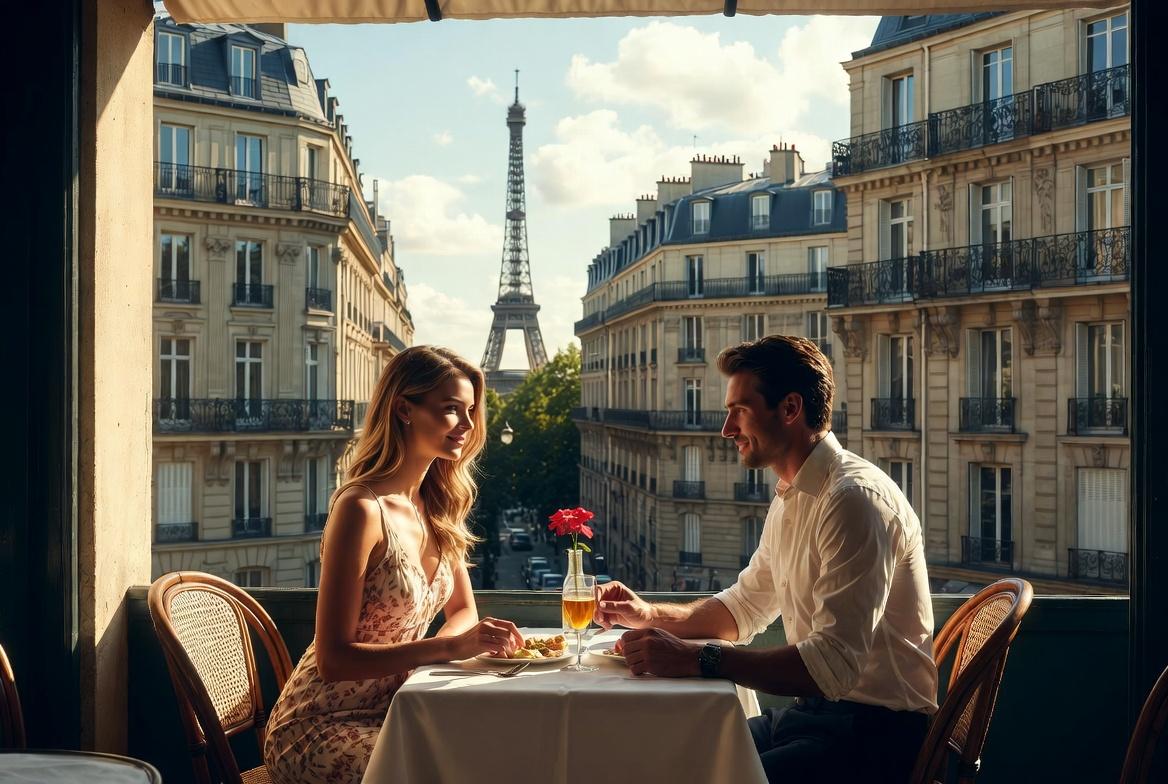
Part 1: Food — The Religion of the Table
The Sacred and the Everyday
There is a moment, about three bites into your first real French meal, when something shifts. It is not just that the food tastes good — though it does, intensely. It is that you realize you have been eating wrong your entire life. Not badly, necessarily. But wrong. As if you had been speaking a language with only half the verbs, or listening to music with only half the notes. French cuisine does not simply feed you. It initiates you into a different way of being.
This is not hyperbole. It is the testimony of almost every serious traveler who has spent time at a French table. The country has spent centuries perfecting not just recipes but an entire philosophy of eating: that food should be seasonal, local, unhurried, and shared. That a meal is not fuel but ceremony. That pleasure is not a guilty secret but a legitimate goal of civilized life.
The Numbers That Matter
France's gastronomic reputation is quantified in the 2026 Michelin Guide, which awards the country 668 starred restaurants. To put that in perspective: Japan, the only nation that competes with France in total stars, has a population nearly twice as large. Per capita, France's density of Michelin-starred dining is staggering. Paris alone hosts more three-star restaurants than most countries have in total.
But Michelin tells only part of the story. France also dominates the Bocuse d'Or, the unofficial world cup of cooking, named after the legendary Lyonnais chef Paul Bocuse. French teams consistently medal, and French techniques — the brigade system, the mother sauces, the classical knife cuts — are taught in culinary schools from Tokyo to Texas. When the world imagines fine dining, it imagines a French kitchen.
The Two Capitals: Paris vs. Lyon
Paris is the glamorous face of French gastronomy. It is the city of the Ritz, of Maxim's, of Alain Ducasse's empire of stars. In Paris, you can eat a different Michelin-starred meal every night for a month and still not exhaust the options. The city's brasseries — grand, noisy, tiled affairs like Bofinger and La Coupole — serve oysters and choucroute and steak frites to a clientele that ranges from tourists in sneakers to politicians in bespoke suits. The patisseries are laboratories of sugar and butter: Ladurée's macarons, Pierre Hermé's Ispahan (rose, lychee, raspberry), Poilâne's sourdough loaves that last a week and taste like the history of bread.
Lyon, however, is the soul. If Paris is the face French gastronomy shows the world, Lyon is the heart it keeps for itself. The city sits at the confluence of the Rhône and Saône rivers, surrounded by some of France's best farmland: the poultry of Bresse, the fish of the Dombes lakes, the Charolais beef, the wines of Beaujolais and Côtes du Rhône. This abundance created a tradition of mères — female cooks who, in the 19th and early 20th centuries, left wealthy households to open their own small restaurants, or bouchons. They served hearty, honest food: sausage, roast chicken, poached eggs in red wine sauce, praline tarts.
The most famous of these mothers was Eugénie Brazier, who in 1933 became the first person — man or woman — to earn six Michelin stars simultaneously (three at each of her two restaurants). She taught Paul Bocuse, who became the face of nouvelle cuisine and turned Lyon into a pilgrimage site. Today, Bocuse's eponymous restaurant, L'Auberge du Pont de Collonges, still holds three stars, nearly a century after Brazier's triumph. Eating there is not dining. It is visiting a shrine.
Technique as Philosophy
What makes French food French? The answer is technique — a word that sounds dry but is, in practice, a form of devotion.
The brigade system, codified by Georges Auguste Escoffier in the late 19th century, divided the kitchen into ranks: chef de cuisine, sous chef, chef de partie, commis. Each cook had a specific station (sauces, fish, meat, pastry). The system brought military precision to the chaos of a busy restaurant and spread around the world. Every modern kitchen, from a diner in Ohio to a kaiseki spot in Kyoto, owes something to Escoffier's organizational genius.
The mother sauces — béchamel, velouté, espagnole, tomato, and (later) hollandaise — provided a grammar of flavor. Learn these five, and you could create hundreds of derivative sauces. It was a curriculum, a set of building blocks. French cooking taught the world that technique is not the enemy of creativity but its foundation. You must know the rules before you can break them.
Then there are the details that seem obsessive until you taste the result. The egg that is beaten exactly 32 times for a perfect omelette (no more, no less). The pastry dough that is folded and rested, folded and rested, to create a thousand ethereal layers. The stock that simmers for 24 hours, never boiling, because boiling makes it cloudy. The cheese that is aged in a cave with precisely 92% humidity. The wine that is decanted at the exact moment its tannins soften.
This is not pretension. It is attention. And attention, the French believe, is the highest form of love.
The Everyday Miracle
The danger of writing about French food is that it becomes a catalog of trophies: the stars, the awards, the famous names. But the real miracle of French gastronomy is not at the three-star temples. It is in the everyday.
It is the boulangerie at 7 a.m., when the baguettes are still warm and the crust cracks like thin ice. It is the market in a provincial town, where the farmer selling strawberries will tell you which field they came from and what the weather was like when they ripened. It is the little bistro where the plat du jour — a daube Provençale, a navarin of lamb, a simple oeuf mayo — costs twelve euros and tastes like someone's grandmother made it with tears and joy.
It is the cheese course. Americans, even food-loving Americans, often skip the cheese course. We eat cheese as a snack, a topping, an ingredient. The French eat cheese as a course — separate from the main, before dessert, accompanied by bread that is good but not so good that it overwhelms the cheese. And the cheese itself is not cheddar or jack or a sad plastic-wrapped slice. It is a Camembert that oozes at room temperature. A Comté aged for 24 months, with crystals that crunch like salt. A Roquefort so blue and aggressive it seems almost angry. A fresh goat cheese from the Loire, so young it still tastes of grass.
It is the wine. Not the grand crus that cost a month's rent, but the simple Côtes du Rhône that costs eight euros at the supermarket and tastes of sun and stones and the south. The French do not save wine for special occasions. Wine is for Tuesday. Wine is for lunch. Wine is for washing down an omelette. The alcohol is almost incidental. What matters is the conversation that wine enables: the slow, laughing, argumentative, philosophical conversation that lasts three hours and covers everything from politics to love to the correct way to prune a rose bush.
The Challenges (Because Nothing Is Perfect)
An honest assessment must acknowledge that French gastronomy has problems. The prices in tourist-heavy areas of Paris have become absurd. A coffee on the Champs-Élysées can cost nine euros. A mediocre croissant near the Eiffel Tower can cost five. The traditional bistro — once the heart of French everyday dining — is becoming rarer, replaced by overly stylized "neo-bistros" that charge more and serve less. The work culture in French kitchens is famously brutal: long hours, low pay, screaming chefs. The industry has made some reforms, but it remains a difficult life.
And there is the question of diversity. France's culinary reputation was built by men (and a few remarkable women) working within a very specific tradition. That tradition is extraordinary, but it is not the only one. Many of the most exciting restaurants in Paris today are not French at all. They are Japanese-French fusion, North African-French, Vietnamese-French. The best couscous in Paris is as good as the best cassoulet. The future of French food, like the future of France itself, is mixed.
The Verdict on Food
Still: the reputation is earned. France remains the world's most important destination for refined, technique-driven, heritage-rich cuisine. Italy has more everyday warmth. Japan has more pristine ingredients. Thailand has more vibrant spice. But for structured gastronomy — for the sense that you are not just eating but participating in a centuries-old tradition of excellence — France has no equal.
When you sit down to a proper French meal, you are not just feeding yourself. You are joining a conversation that began with the Sumerians (who first brewed beer), continued through the Romans (who spread the grapevine), was refined by the monks (who figured out champagne and cheese), systematized by Escoffier, revolutionized by Bocuse, and is still being written by every baker, butcher, and cook who shows up at 4 a.m. to do it all over again.
That is the religion of the table. And France is its Vatican.
Part 2: Fashion — The Armor of Elegance
The Invention of Glamour
Long before there were fashion weeks, influencers, or "brand ambassadors," there was a man in a powdered wig who understood that clothes were not mere protection from the weather. Clothes were power.
Louis XIV, the Sun King, built the most extravagant court in European history at Versailles. He required his nobles to attend him in elaborate costumes: silk coats embroidered with gold thread, lace cravats that took weeks to make, high-heeled shoes dyed red (the most expensive color). The nobles complained, of course. The clothes were uncomfortable, expensive, and constantly changing. But that was the point. By keeping his aristocracy focused on their wardrobes, Louis kept them from plotting against him. Fashion became a tool of statecraft, and France became its capital.
That was the 17th century. The 21st century is more complicated, but the basic fact remains: Paris is still widely regarded as the fashion capital of the world. Not the only one — Milan, New York, and London have legitimate claims — but the first one. The one that sets the tone. The one that the others watch.
What Makes Paris Different
The global fashion industry is organized around four major cities, each with a distinct personality and a different week on the calendar.
New York is commercial. Its shows happen earliest (February and September) because American buyers need to place orders early. New York fashion is wearable, marketable, designed to sell. The great American brands — Ralph Lauren, Marc Jacobs, Tom Ford (though he shows in New York less often now) — understand that clothes must move off the rack.
London is avant-garde. Its designers — Alexander McQueen (before his death), Vivienne Westwood, John Galliano (now based elsewhere) — built reputations on shock, drama, and intellectual provocation. London fashion is not always wearable, but it is always interesting.
Milan is craft. The Italian houses — Gucci, Prada, Armani, Versace — excel at ready-to-wear, at the precise intersection of luxury and practicality. Italian leather, Italian tailoring, Italian confidence. Milan fashion says: We know how to make beautiful things. Wear them.
And then there is Paris. Paris is prestige. Paris is the oldest, the grandest, the most mythologically charged. Paris is where haute couture was invented — the legally protected designation that allows a house to create custom-made garments for individual clients, hand-stitched, fitted over multiple appointments, costing as much as a car. Only a handful of houses qualify as official couture houses today (Chanel, Dior, Givenchy, Jean Paul Gaultier, and a few others), and they are all in Paris.
Why? Because the French government protects the term. Haute couture is not just a marketing phrase. It is a legal status with strict requirements: a workshop in Paris, a certain number of employees, a certain number of original designs shown each season. The system dates to 1868, when the Chambre Syndicale de la Haute Couture was founded. It is a guild, a union, a fortress. And it keeps the center of gravity in Paris.
The Houses That Built the World
To understand French fashion is to know the names that changed how we dress.
Coco Chanel is the most important. She did not invent the little black dress, but she made it essential. She did not invent trousers for women, but she made them chic. She took the corset — that instrument of female suffering — and threw it away. She gave women jersey, which had been used for men's underwear, and turned it into evening wear. She gave them the Chanel suit: collarless, braid-trimmed, comfortable enough to move in. She gave them the 2.55 handbag, with its chain strap that freed the hands. She gave them costume pearls, because why should only the rich have jewelry? Chanel understood that fashion was not about following rules. It was about breaking them with such style that the broken rules became new rules.
Christian Dior did the opposite, and it worked just as well. In 1947, ten years after Chanel had closed her house (she would return in 1954), Dior presented his first collection. It was called the "New Look" by Carmel Snow, the editor of Harper's Bazaar. The look was shocking: rounded shoulders, a cinched waist, a skirt that billowed out over layers of petticoat. After the austerity of World War II, with its fabric rationing and military silhouettes, Dior offered luxury, femininity, extravagance. Women wept at the shows. They had forgotten they could look like that. Dior did not just sell clothes. He sold hope.
Yves Saint Laurent was Dior's protégé, taking over the house at 21 when Dior died suddenly. He soon opened his own house and became the first designer to put women in tuxedos (Le Smoking, 1966), the first to use non-white models on the runway, the first to draw inspiration from street style and art and other cultures. Saint Laurent understood that fashion was not separate from life. It was life, worn on the body.
Hubert de Givenchy gave us Audrey Hepburn's little black dress in Breakfast at Tiffany's — the most famous costume in film history, though it was actually a dark gray silk cocktail dress. Louis Vuitton began as a trunk-maker in 1854, creating flat-topped luggage that stacked easily on trains, and grew into the world's most valuable luxury brand. Hermès started as a harness workshop in 1837 and gave us the silk scarf, the Kelly bag (named for Grace Kelly), and the Birkin (named for Jane Birkin), which is less a handbag than a financial instrument, appreciating in value faster than gold.
Paris Fashion Week: The High Holy Days
Twice a year, in March (fall/winter collections) and October (spring/summer), the fashion world descends on Paris. Editors from Vogue, buyers from Bergdorf Goodman, celebrities who are paid to sit in the front row, and thousands of photographers, assistants, stylists, and hangers-on fill the city's grandest venues. The shows are not just fashion events. They are spectacles: Chanel builds a full supermarket or a rocket ship or a forest inside the Grand Palais; Dior transforms the lawn of the Rodin Museum into a fantasy garden; Louis Vuitton takes over the Louvre's courtyard.
The week is exhausting, exhilarating, and essential. What shows in Paris sets the vocabulary of silhouette, color, and mood for the next six months. When a Paris designer shows a new hem length, the world notices. When a Paris house uses a new fabric, suppliers scramble to stock it. The influence is not absolute — the industry is too decentralized for that — but it is real.
The Challenges: A Multipolar World
No honest assessment can pretend that France's dominance is unchallenged. The fashion world has become polycentric.
Milan has grown enormously in ready-to-wear. The Italian houses — Gucci under Tom Ford and then Alessandro Michele, Prada under Miuccia Prada and Raf Simons, Armani's enduring empire — have built global businesses that rival or exceed the French houses in revenue. Italian craftsmanship in leather goods and tailoring is arguably superior to French. The difference is one of emphasis: Milan is about the product; Paris is about the myth.
New York remains the commercial capital. The American market is vast, and American designers — from Michael Kors to Tory Burch to the late Virgil Abloh (who also showed in Paris) — understand how to sell clothes to real people. New York Fashion Week may lack Paris's glamour, but it fills orders.
Emerging scenes in Shanghai, Seoul, Tokyo, and Lagos are producing designers who no longer look to Paris for validation. The internet has democratized fashion. A young designer in Mumbai can build a following on Instagram without ever showing in Paris. The center may not hold.
And there are internal challenges. The pace of fashion has become brutal: multiple collections per year (main line, resort, pre-fall, capsule collaborations), constant pressure to produce "content," the environmental toll of an industry built on disposability. French fashion houses are part of the problem, though some are trying to change. The old system of haute couture — slow, bespoke, impossibly expensive — feels almost quaint in an age of fast fashion and Shein.
Why Paris Still Matters
And yet.
Walk into 31 Rue Cambon in Paris, the original Chanel boutique. Stand on the mirrored staircase that Coco Chanel used to sit on, watching her clients without being seen. Feel the weight of history in the stone. That feeling — of being connected to something that began a century ago and continues still — is not replicable in Milan or New York or Shanghai.
Paris matters because fashion matters, and fashion matters because humans have always adorned themselves. We paint our faces, shape our hair, cover our bodies in cloth and leather and jewels. We do this to attract, to intimidate, to celebrate, to mourn. Fashion is not trivial. It is one of the fundamental human arts: the art of the self as a work of creation.
And no city has told that story as long or as well as Paris. From Louis XIV's silk stockings to Chanel's jersey suits to Dior's New Look to Saint Laurent's Le Smoking to the spectacles of contemporary Paris Fashion Week, the city has been the stage on which the drama of fashion has unfolded. Other cities have joined the performance. But Paris built the theater.
Part 3: Art — The Museum of Dreams
The Capital of Seeing
For nearly two centuries, if you wanted to be an artist, you went to Paris. It was not a choice, not a calculation, not a career move. It was a calling. From the 1820s through the 1950s, Paris was the undisputed center of the Western art world — the place where styles were born, battles were fought, and reputations were made or destroyed. Every young painter with ambition and a small amount of money saved for the train fare. Every sculptor who dreamed of seeing their work in marble. Every writer who believed that art could change the world. They all came to Paris.
Why? The answer is complicated, but part of it is simple: Paris had the museums, the galleries, the critics, the collectors, and — most importantly — the other artists. Art is a conversation, and Paris was where the conversation was loudest. You could argue about color with a stranger in a café and find that stranger was named Monet. You could drink absinthe with a man who would later cut off his ear. You could sit for a portrait by a woman who would become a legend. The city was electric with possibility.
Today, the art world is more dispersed. New York dominates the contemporary market. London has its own powerful ecosystem. Berlin, Shanghai, Mexico City, and Los Angeles have vibrant scenes. But Paris remains one of the top three art cities in the world — and for the traveler seeking beauty, history, and the deep pleasure of standing before a masterpiece, it is arguably the finest.
The Holy Trinity: Louvre, Orsay, Pompidou
Paris offers three great museums, each representing a different era of art, each essential, each overwhelming in its own way.
The Louvre is the largest museum on earth. That is not hyperbole. It has over 380,000 objects and 35,000 works of art on display across 60,000 square meters. You could spend a minute in front of each piece, eight hours a day, and it would take more than two months to see everything. No one does this. No one should. The Louvre is not a museum to be conquered. It is a museum to be wandered.
The building itself is part of the experience: a former royal palace, its history stretching back to the 12th century. The glass pyramid, added in 1989, was controversial at first — modern architecture invading a Renaissance courtyard — but has become as iconic as the Eiffel Tower. Inside, the treasures are almost obscene in their abundance. The Venus de Milo, armless and eternal. The Winged Victory of Samothrace, striding forward on the prow of a stone ship. The Mona Lisa, smaller than you expect and surrounded by a permanent crowd of phone-wielding pilgrims. But the real joy of the Louvre is not the famous pieces. It is the unexpected ones: the tiny Egyptian figurine carved four thousand years ago, the medieval gold altarpiece that glows like captured sunlight, the Vermeer that you have to yourself because everyone else is looking at da Vinci.
The Musée d'Orsay is the Louvre's younger, more manageable sibling. Housed in a former train station built for the 1900 World's Fair, the building itself is a masterpiece of Beaux-Arts architecture — the great clock face still visible from inside, the vaulted ceiling soaring overhead. The Orsay specializes in art from 1848 to 1914, the period that gave us the Impressionists and their heirs.
And what a collection it is. Manet's Olympia, the courtesan who stared down her audience and changed painting forever. Monet's Cathedrals of Rouen, a series showing the same building at different times of day, light as the true subject. Van Gogh's Starry Night Over the Rhône (not the more famous version, which is in New York, but equally stunning). Renoir's Bal du moulin de la Galette, a Sunday afternoon of dancing and drinking and youth, captured in soft, sun-dappled strokes. Degas's Little Dancer of Fourteen Years, the bronze ballerina in her tulle skirt, controversial when first shown because she looked like a real girl, not an idealized one. Cézanne's apples, which are never just apples but meditations on form and color and the way the eye actually sees.
The Orsay is the perfect size: large enough to astonish, small enough to manage in a single day. You will leave exhausted but transformed, seeing light differently, noticing how shadows fall, understanding that a painting is not a photograph but an argument.
The Pompidou Centre is the third point of the triangle. Built in 1977, with its brightly colored pipes and escalators on the outside of the building, it was meant to shock. It still does. The Pompidou houses the Musée National d'Art Moderne, Europe's largest collection of 20th and 21st century art. Here are Matisse's dancing figures, Picasso's fractured faces, Kandinsky's abstract explosions, Pollock's poured webs, Warhol's soup cans. Here is the art that broke the rules of the Orsay and the Louvre, that asked not "what is beautiful?" but "what is art?" — and answered with everything from a urinal (Duchamp) to a canvas painted entirely blue (Klein) to a room filled with fat (Beuys).
The Pompidou is not for everyone. Some visitors find modern art confusing or pretentious. But the building itself — with its panoramic view of Paris from the top floor — is worth the trip. And the permanent collection, properly explored, tells the story of how artists responded to a century of war, technology, and existential uncertainty. They did not always succeed. But they always tried.
Beyond the Big Three
The great museums are only the beginning. Paris has more than 130 museums, and many of them are world-class in their own right.
The Musée de l'Orangerie, tucked into the corner of the Tuileries Garden, holds Monet's Water Lilies — eight enormous panels arranged in two oval rooms, the way Monet intended. You sit on a bench in the center and let the water and sky and flowers wash over you. It is less like looking at art and more like meditation.
The Musée Rodin, housed in the mansion where the sculptor lived and worked, displays The Thinker, The Kiss, and The Gates of Hell in a garden filled with roses. Rodin's work is physical, passionate, almost violent — bronze and marble bodies straining toward each other or collapsing inward. It is impossible to see a Rodin without feeling something in your own muscles.
The Musée Picasso, in the beautiful Hôtel Salé in the Marais district, holds thousands of works by the 20th century's most famous artist. The collection is strongest in the early and late periods — the Blue Period, the Rose Period, the late paintings of musketeers and lovers — and weaker in the Cubist years (most of those are elsewhere). But the building alone is worth the visit.
The Fondation Louis Vuitton, designed by Frank Gehry and opened in 2014, is a contemporary art museum disguised as a cloud of glass. It sits in the Bois de Boulogne, a park on the western edge of Paris, and its exhibitions feature living artists from around the world. It is proof that Paris is not only preserving the past but investing in the future.
The Lost Generation and the Café Culture
No discussion of Paris and art is complete without mentioning the cafés. In the 1920s, a generation of American expatriates — writers and artists who had come to Paris to escape Prohibition and Puritanism — made the Left Bank their home. Hemingway, Fitzgerald, Gertrude Stein, Ezra Pound, James Joyce, Man Ray, Josephine Baker. They drank at the Café de la Rotonde, the Café du Dôme, Les Deux Magots. They argued about art and love and politics. They wrote the books and painted the paintings that defined modernism.
That era is gone, but the cafés remain. You can sit at Les Deux Magots today, order an overpressed espresso, and imagine you are at the next table from Jean-Paul Sartre and Simone de Beauvoir. The romance is partly fantasy — the 1920s were not as glamorous as the myths suggest — but the feeling is real. Paris is a city where art has been taken seriously for so long that it permeates the air. You breathe it in with the cigarette smoke and the smell of coffee.
Paris vs. New York vs. London in 2026
The contemporary art world has shifted. If you want to buy and sell blue-chip art — the multimillion-dollar pieces that hedge fund managers hang in their penthouses — New York is the undisputed capital. The auction houses (Christie's, Sotheby's, Phillips) do their biggest sales in Manhattan. The galleries in Chelsea and the Lower East Side represent the hottest emerging artists. The market is ruthless, fast, and enormously wealthy.
London holds its own, with a strong ecosystem of galleries (White Cube, Hauser & Wirth, Gagosian's London outpost), world-class museums (Tate Modern, the National Gallery, the Victoria and Albert), and a vibrant art fair scene (Frieze London). Brexit has damaged London's position slightly — it is harder for European artists to work there, harder for collectors to move money — but it remains a major player.
Paris has been regaining ground. The opening of new international galleries (Hauser & Wirth in 2023, David Zwirner in 2022) and major fairs (Paris Photo, FIAC, and now Paris+ by Art Basel) has revitalized the scene. President Macron's government has actively courted the art world, offering tax incentives and streamlining visa processes. The result is a city that feels more dynamic than it has in decades. Paris will never again be the undisputed center of the art world — that era is over — but it is once again a place where important things happen.
The Verdict on Art
For the traveler, the question is not which city is "best." The question is what you want.
If you want the contemporary market — the thrill of discovery, the buzz of opening nights, the sense that you are witnessing the future — go to New York or London.
If you want beauty. If you want to stand before paintings that have moved people for centuries and feel something click into place inside you. If you want to spend an afternoon with the Impressionists and walk out into the Paris light seeing the world differently. If you want the deep, slow, accumulated pleasure of being in a city that has treated art as sacred for hundreds of years.
Then you go to Paris.
Part 4: Synthesis — The Art of Living
The Thread That Connects
We have spent thousands of words on food, fashion, and art — treating each as a separate kingdom with its own history, its own heroes, its own temples. But the truth is more interesting. In France, these three domains are not separate. They are expressions of a single idea: that life can be shaped into beauty through attention, technique, and pleasure.
Think about it. A perfectly executed sauce béarnaise and a perfectly tailored jacket share the same grammar of precision. The chef who balances acidity and fat is doing the same work as the designer who balances silhouette and fabric. The painter who captures the exact shade of light on a water lily and the pastry chef who creates a mille-feuille with a thousand paper-thin layers — both are engaged in the transformation of raw material into something that transcends its origins.
The French word for this is métier. It means craft, but also calling, also the patient accumulation of skill over years. A chef has a métier. A couturier has a métier. An artist has a métier. And the French respect métier more than almost anything else. They do not celebrate the amateur, the genius who leaps without looking, the disruptive innovator who burns down tradition. They celebrate the master who has spent thirty years learning to do one thing better than anyone else on earth.
This is why France remains a mecca. Not because every French meal is transcendent (it is not), or because every French outfit is chic (also not), or because every French painting is a masterpiece (obviously not). But because the culture — the collective conversation — is oriented toward excellence in these domains in a way that few other places sustain. The French argue about food the way Americans argue about politics. They debate the relative merits of butter vs. margarine (butter, always) with the same intensity that other countries reserve for constitutional crises. They care.
Where the Three Overlap
The intersections are everywhere.
The Café as Gallery and Runway. Sit at a sidewalk café in Paris for an hour. You will see fashion walking past you: the woman in the perfectly draped coat, the man whose scarf seems careless until you realize the care it took. You will see art: the light on the limestone buildings, the composition of the street. And you will see food: the espresso in its small cup, the croissant being broken into pieces, the wine being poured at the next table. The café is where all three come together. It is the stage on which the French performance of living unfolds.
The Market as Theater. A French market is not a place to buy groceries. It is a spectacle of abundance and knowledge. The fishmonger can tell you where each fish was caught and what it ate. The cheesemonger will slice you a taste before you commit. The baker's baguettes are still warm from the oven. The butcher's display is arranged like a still life painting. The colors — the red of tomatoes, the green of haricots verts, the purple of eggplant, the gold of melons — are the palette of a Matisse. Shopping at a French market is not a chore. It is an aesthetic experience.
The Museum as Restaurant. The best museums in Paris have excellent cafes and restaurants. You can spend the morning with the Impressionists at the Orsay, then have lunch in the beautiful dining room under the great clock, eating a salad of goat cheese and walnuts and drinking a glass of Sancerre. The food is not an afterthought. It is part of the experience. The French understand that art and appetite are not enemies. They are siblings.
The Body as Canvas. Fashion is art worn on the body. Food is art taken into the body. And the body itself — the nude body celebrated in French painting, the unashamed body on French beaches, the healthy body fed on French food and dressed in French clothes — is the canvas on which all of this is painted. The French relationship with the body is not puritanical, not prurient, but aesthetic. The body is something to be cared for, adorned, and enjoyed. Not worshipped. Not shamed. Just... appreciated.
The Critiques: Nothing Is Perfect
A honest essay must acknowledge the shadows.
Accessibility. The France of this essay — the France of Michelin stars, haute couture, and the Louvre — is expensive. A three-star meal in Paris can cost 400 euros per person. A Chanel handbag costs thousands. Even a modest museum entry fee adds up. The France that most tourists experience is not the France of the elite. It is the France of long lines, mediocre kebab shops, and overpriced souvenirs. The gap between the myth and the reality can be jarring.
Elitism and Exclusion. The French art world, like the French fashion world, has historically been white, male, and Paris-centric. That is changing, but slowly. The great museums are diversifying their collections and leadership. The fashion industry is slowly embracing models of color and designers from outside the traditional system. But the old guard still holds significant power, and the path to success still runs through connections that many people do not have.
The Romance Is Partial. Not every French person is chic. Not every French meal is delicious. Not every French painting is worth looking at. The stereotype of the effortlessly elegant Parisian woman is a fantasy, sustained by magazines and movies and the selective memory of tourists. Real France is full of traffic jams, bureaucracy, bad weather, and ordinary people living ordinary lives. The magic is real, but it is not everywhere, all the time.
Work Culture. The kitchens that produce those extraordinary meals are often brutal workplaces: long hours, low pay, verbal abuse. The ateliers that sew those beautiful clothes are under constant pressure to produce faster, cheaper, more. The artists who fill those museums struggle to pay rent. The glamour sits on top of a structure that is often exploitative. Reform is happening, but slowly.
The Verdict for 2026 Travelers
So: is France truly the mecca?
For food: Yes, if you want refined, technique-driven, heritage-rich cuisine. France remains the world leader in structured gastronomy — the kind of meal that unfolds over hours, that tells a story, that connects you to centuries of tradition. If you want vibrant street food or cheap eats, go to Thailand, Vietnam, or Mexico. If you want pristine ingredients and a religion of seasonality, go to Japan. But if you want the dining experience — the ceremony, the wine, the cheese course, the sense that you are participating in something important — France is unmatched.
For fashion: Yes, for prestige, heritage, and setting the global tone. Paris remains the capital of haute couture and the most mythologically charged city in fashion. Milan has better ready-to-wear. New York has better commercial instincts. London has better avant-garde energy. But Paris has the history, the houses, and the cultural weight. When a designer dreams of showing anywhere, they dream of Paris.
For art: Yes, for the deep, slow pleasure of engaging with the Western tradition. New York and London have surpassed Paris in the contemporary market — the buying and selling of new work. But for the experience of standing before paintings that have shaped how we see — the Louvre, the Orsay, the countless smaller museums — Paris has no equal. And the contemporary scene is resurgent, making Paris once again a place where important new art is shown.
The Final Word: L'Art de Vivre
The French phrase l'art de vivre means "the art of living." It sounds simple, but it is not. It means treating life itself as a creative project. It means paying attention to the quality of your meals, the cut of your clothes, the beauty of your surroundings. It means taking pleasure seriously — not as a guilty indulgence, not as a consumer transaction, but as a discipline and a value.
This is what France offers that no other country quite matches. Not just great food, great fashion, or great art. But a culture that has elevated these things to the level of the sacred. A place where the baker wakes at 3 a.m. not because he has to, but because he believes the bread matters. Where the seamstress takes an extra hour on a hem because the stitch should be invisible. Where the museum guard, asked why he has spent forty years in the same room, says simply: "Look at her. How could I leave?"
That is France. It is not perfect. It is not for everyone. But for those who seek beauty, who believe that pleasure is not shallow but profound, who want to live a life shaped by attention and care — France remains what it has always been.
A mecca. A dream. A place to return to, again and again, because once you have tasted it, nowhere else quite satisfies.


 Arabic
 French
 Spanish
 Portuguese
 Deutsch
 Turkish
 Dutch
Dutch
 Italiano
 Russian
 Romaian
 Portuguese (Brazil)
 Greek
Greek